We Provide

The Best Flow Cytometry
Courses for You

OUR ACCREDITED COURSES
FOR SCYM PREP AND CMLE CREDITS

Supernova Flow Cytometry offers the first comprehensive, accredited training pathway in flow cytometry, delivering unique value on multiple fronts.These courses are designed to be taken sequentially for a complete training experience, but can also be taken à la carte to fill specific knowledge gaps. Each course is fully online (accessible via our learning management system) and also offered periodically as a live virtual class for those who prefer real-time instruction. In addition, we schedule certain courses as in-person workshops for hands-on practice (often bundling related courses into a 3-4 day on-site training session). Upon successful completion of each course, learners receive a certificate and earn continuing education credits (CMLE hours).


  • Structured, End-to-End Curriculum: We provide a cohesive 12-course program that covers everything from basic principles to advanced, specialized topics. This far-reaching curriculum is unparalleled – current training options are often fragmented, focusing on either introductory theory or niche applications, but not both. Supernova Flow Cytometry’s program ensures learners build fundamental knowledge (optics, fluidics, data analysis) before progressing to complex topics (multicolor panel design, regulatory compliance, high-dimensional data analysis). This integrated approach helps standardize best practices across research and clinical labs, addressing the current fragmentation in cytometry training.
 
 
  • SuperNova Flow Cytometry offers a fully accredited, peer-reviewed curriculum designed for both clinical and research flow cytometry professionals. All courses provide CMLE credits approved by the American Society of Cytopathology and accepted by ASCP for certification maintenance—an essential benefit for certified lab personnel. Graduates receive certificates and credit hours (13+ for completing all 12 courses), making SuperNova Flow Cytometry a highly efficient option for professional development.

  • The curriculum is also aligned with the SCYM(ASCP) certification exam, incorporating exam-style questions and objectives to prepare trainees for this advanced credential. This dual focus on continuing education and SCYM preparation sets SuperNova Flow Cytometry apart from competitors and positions it as a potential unofficial SCYM prep provider—making it a strategic choice for career-focused cytometrists.

For customized courses, please contact caguilerasandoval@supernova-flowcytometry.com by indicating “Customized Course” in the subject line.


✖ Clear Filters

    Assay and Panel Validation

    Discover how to build and defend a regulatory-grade validation plan—from RUO to cGMP and IVD—by designing studies for specificity, accuracy, precision, linearity, and LOD/LOQ while aligning with both FDA and CLIA expectations....
    Placeholder

    Biosafety & Sample Transport

    Learn biosafety requirements for flow cytometry cores. Covers sample types, BSL levels, transport rules, labeling, chain of custody, and prohibited materials to ensure safe and compliant use of SRL facilities....
    Placeholder

    Core/SRL Orientation and Safety

    This module introduces SRL orientation: access, training tiers, biosafety, spill response, and housekeeping. Emphasis is on safe practices, compliance, and etiquette, preparing learners for responsible core facility use....
    Placeholder

    Course 12: Flow Cytometry Advanced Analysis

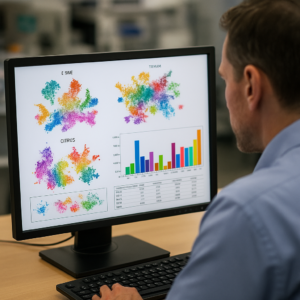
    Learn how high-dimensional flow cytometry propels cell- and gene-therapy programs—from selecting manual, automated, or hybrid gating to extracting hidden cell populations with FlowSOM, PhenoGraph, t-SNE, UMAP, and supervised tools like CITRUS or SVM—while maintaining grade data integrity and audit readiness. You’ll also glimpse the future of digital cytometry, including real-time analytics, multi-omics fusion, and scalable AI pipelines that turn millions of events into actionable, regulatory-grade biomarkers.


    Course 2- Instrumentation – Optics, Fluidics, and Detection

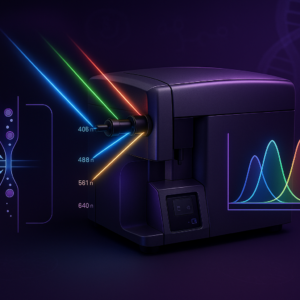
    Explore how lasers, optics, fluidics, and detectors integrate with spectral techniques, voltage tuning, and multicolor panel design to meet real flow assay needs. Complete the brief assessment to earn a CMLE-accredited certificate that confirms your ability to choose, optimize, and troubleshoot flow-cytometry platforms.

    FDA Regulatory Requirements for Flow Cytometry

    Explore FDA regulatory expectations for flow cytometry in cell and gene therapy, including assay validation (CLSI H62, ICH Q2), 21 CFR Part 11, CLIA/LDTs, and CAR-T QC applications. Earn 1 ASCP CMLE credit.

    ...
    Placeholder

    Flow Cytometry in Pharma: Unlocking Better Decisions with High-Dimensional Insights

    Flow cytometry drives pharma by enabling immunophenotyping, biomarker discovery, clinical trials, and cell therapy. This blog explores how data quality, education, and standardization turn cytometry into a strategic decision-making tool....
    Placeholder

    Immunophenotyping & Clinical Diagnostics

    Master clinical immunophenotyping: T/B/NK panels, leukemia/lymphoma screening, standardized gating, QC, and spectral vs conventional flow. Apply best practices for diagnostics and CGT manufacturing....
    Placeholder

    Instrument Anatomy

    Learn the anatomy of flow cytometers—fluidics, optics, detectors—while comparing analyzers vs sorters and conventional vs spectral systems. Gain practical insights to select and use instruments effectively....
    Placeholder

    Instrumentation – Optics, Fluidics, and Detection

    Explore flow cytometer design—optics, fluidics, and detection systems. Learn how lasers, filters, and PMTs work together to generate, focus, and interpret fluorescence signals in research and CGT manufacturing.   ...
    Placeholder

    Panel Design and Reagent Selection

    Optimize flow cytometry panels for CGT: reagent prep, titration, FMOs, single-color controls, conventional vs spectral strategies, QC trending, and benchmarking. Practical, defensible methods for academia and industry....
    Placeholder

    pricing plan 3

    Placeholder

    Pricing Plan2

    Placeholder

    Sample Preparation Basics

    Master the fundamentals of flow cytometry sample preparation. Learn suspension, buffers, viability dyes, cell counting, fixation, and controls to ensure reliable, reproducible, and safe data acquisition....
    Placeholder

    What is Flow Cytometry?

    Discover the principles of flow cytometry: fluidics, light scatter, fluorescence, and data collection. Learn how single-cell measurements enable powerful applications in immunology, diagnostics, and cell and gene therapy....
    Placeholder