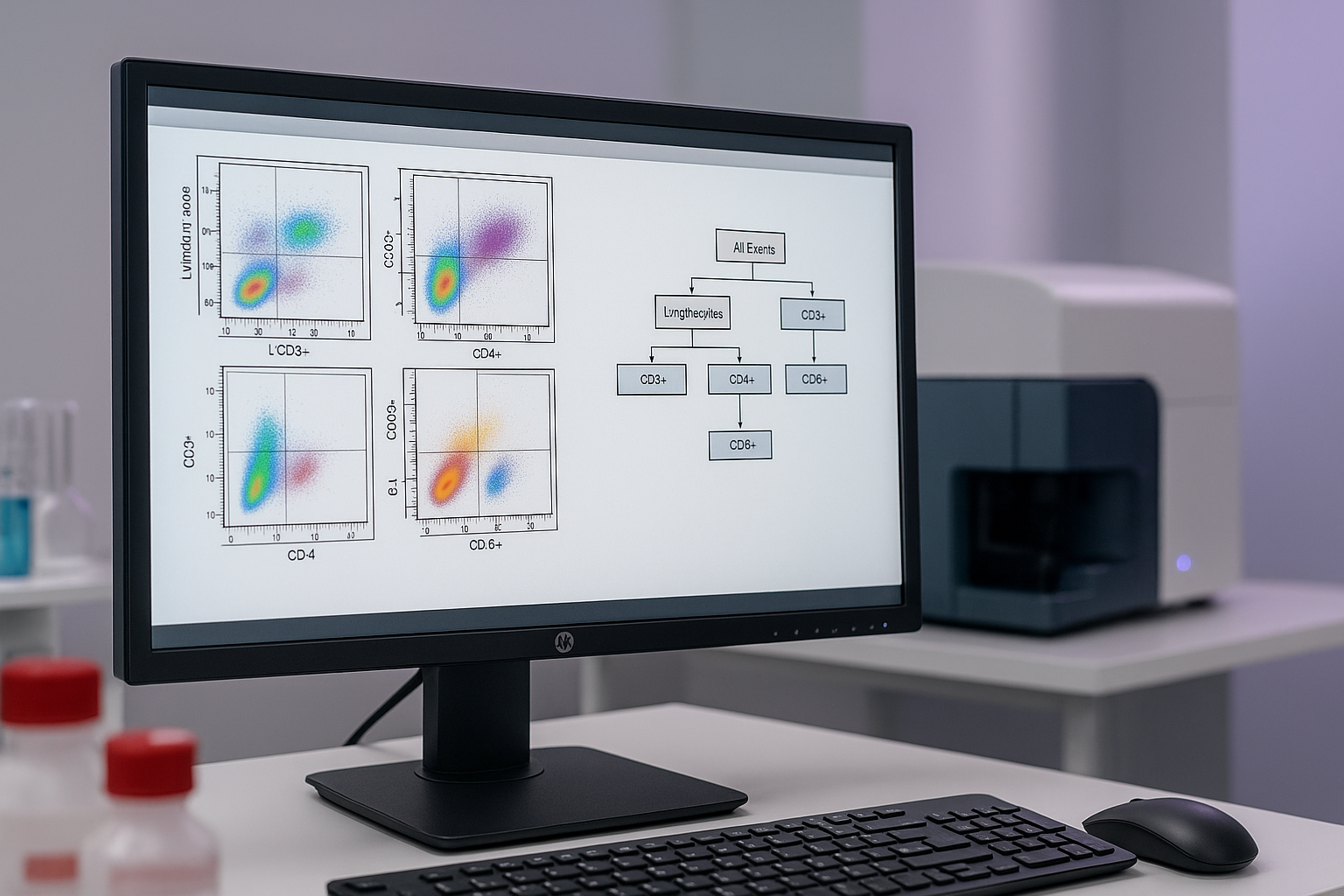
– The role of flow cytometry in evaluating identity, purity, viability, and function of therapeutic cell
products in Cell and Gene Therapy (CGT).
– Hierarchical gating strategies including root, lineage, and subset gating for analyzing complex immune
phenotypes.
– Manual vs. automated gating techniques, including the advantages, limitations, and hybrid workflows.
– The application and importance of back-gating as a validation tool in high-dimensional datasets.
– The differences between conventional and spectral flow cytometry and their impact on panel design
and data interpretation.
– The use of FMO controls, blinded gating protocols, and audit trails to reduce subjectivity and ensure
reproducibility.
– Software platforms such as FlowJo, FCS Express, Kaluza, and Cytobank for clinical and research-based
analysis.
– Strategies to detect and manage batch effects, tandem dye degradation, and instrument drift.
– The significance of spectral unmixing accuracy and how to verify it using metrics like chi-square error.
– Best practices in panel design including brightness matching, minimizing spectral overlap, and
optimizing marker distribution.
– Quality control measures including the use of standardized operating procedures (SOPs), external
controls, and proficiency testing.
– Regulatory and community guidelines from MIFlowCyt, ISAC, ICCS, and ICH relevant to clinical
cytometry workflows.