– Understand the role of flow cytometry in cell and gene therapy, including its use in identity, purity,
viability, and potency assays for QC, release, and clinical trials.
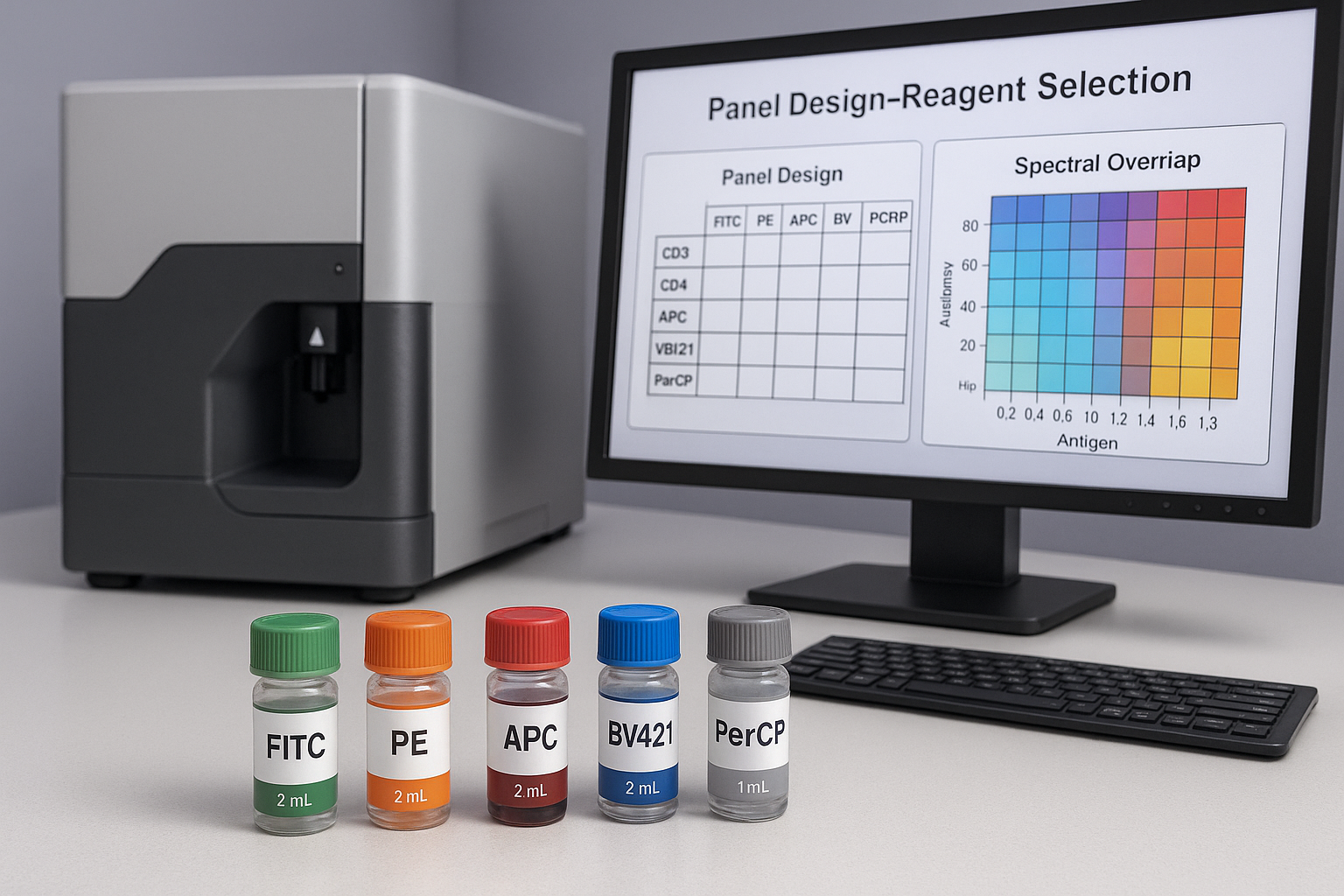
– Apply the principles of panel design, including fluorochrome-antigen matching, marker density
evaluation, co-expression patterns, and spectral overlap minimization.
– Perform antibody titration and validation on relevant manufacturing samples, ensuring optimal stain
index and reproducibility.
– Utilize controls such as FMO, single-color, viability dyes, and CAR-T reference standards to enhance data
accuracy and gating strategy.
– Select antibodies with appropriate regulatory designations (RUO, IVD, GMP) and understand how to
justify inclusion in FDA-regulated assays.
– Interpret and incorporate FDA guidance and harmonization practices, including IND submission
requirements and multi-site standardization protocols.
– Differentiate between conventional and spectral cytometry, recognizing the operational advantages,
challenges, and panel design strategies unique to each.
– Design and optimize high-dimensional panels, incorporating advanced metrics such as Stain Index,
Complexity Index, Similarity Index, and Spillover-Spread Matrix.
– Identify and mitigate common pitfalls such as spectral spillover, autofluorescence, tandem dye instability,
and unmixing errors.
– Demonstrate foundational proficiency to support further preparation for the Flow Cytometry Certification
Exam and contribute effectively to regulated flow cytometry assays in CGT settings.